GBPUSD, often called Cable, is one of the most watched currency pairs in the forex market. It combines the British pound and the US dollar, two of the world’s most traded currencies, and it remains one of the top three currency pairs in London by turnover. Sterling accounted for 10.2% of global FX turnover in the BIS 2025 survey, while the Bank of England’s London survey said the top three pairs in London remained EUR/USD, USD/JPY and GBP/USD.
That popularity is one reason why so many traders are attracted to GBPUSD. Another is its character. Compared with some other major pairs, GBPUSD often moves with more energy. It can trend cleanly, react sharply to news, and create strong opportunities for both short-term and swing traders. At the same time, that same volatility can punish weak risk control. Good GBPUSD trading is not about chasing every move. It is about understanding when the pair is likely to move, why it is moving, and how to manage risk when the market becomes fast and emotional.
This guide explains practical GBPUSD trading tips that can help beginners and intermediate traders build a more disciplined approach. It also shows how to connect those ideas with the tools and resources available on the NordFX website, including trading platforms, trading accounts, the Learning Center, and NordFX’s guide on how to trade forex for beginners.
Why GBPUSD attracts so much attention
GBPUSD is popular because it offers a strong combination of liquidity, volatility and news sensitivity. The US dollar is involved in the vast majority of global FX trading, and the pound remains one of the key reserve and trading currencies. That means Cable usually has deep participation and regular movement, especially when London and New York are both active. BIS data confirms the dollar remains on one side of 89.2% of global FX trades, while sterling remains among the leading traded currencies.

For traders, this matters because liquid pairs are generally easier to enter and exit, while active pairs offer more opportunities. But GBPUSD is not a pair that rewards random trading. It reacts quickly to macroeconomic expectations, especially those linked to the Bank of England and the Federal Reserve. The Bank of England itself states that its primary monetary policy tool is Bank Rate, which directly affects borrowing costs and therefore expectations around growth, inflation and the pound.
In simple terms, if traders expect UK rates to stay higher for longer relative to US rates, the pound may strengthen. If US data starts supporting a more hawkish Fed while UK data weakens, GBPUSD may come under pressure. This relative view is essential. Traders are not analysing the pound in isolation or the dollar in isolation. They are constantly comparing the two.
Understand what really moves GBPUSD
One of the most useful GBPUSD trading tips is this: do not trade the chart without understanding the macro backdrop. Even if you are mainly a technical trader, the broader fundamental picture often decides whether a breakout extends, fails, or reverses.
The first major driver is interest rate expectations. Markets constantly reprice future central bank decisions. Inflation data, labour market reports, GDP figures, retail sales and PMIs can all affect those expectations. A strong UK inflation print may support the pound if traders think the Bank of England will stay restrictive. A surprisingly strong US payrolls report may support the dollar if it raises expectations for tighter or longer-lasting Fed policy.
The second driver is risk sentiment. In periods of geopolitical stress or sharp market uncertainty, the US dollar often benefits from safe-haven demand. Reuters reported on March 16, 2026 that sterling had come under pressure amid global uncertainty linked to the Middle East, even as attention turned to the coming Bank of England decision.
The third driver is relative growth. Traders compare whether the UK economy looks more resilient or more fragile than the US economy. Even when both economies slow, markets may still favour one currency if it is expected to hold up better.
Focus on the best trading hours
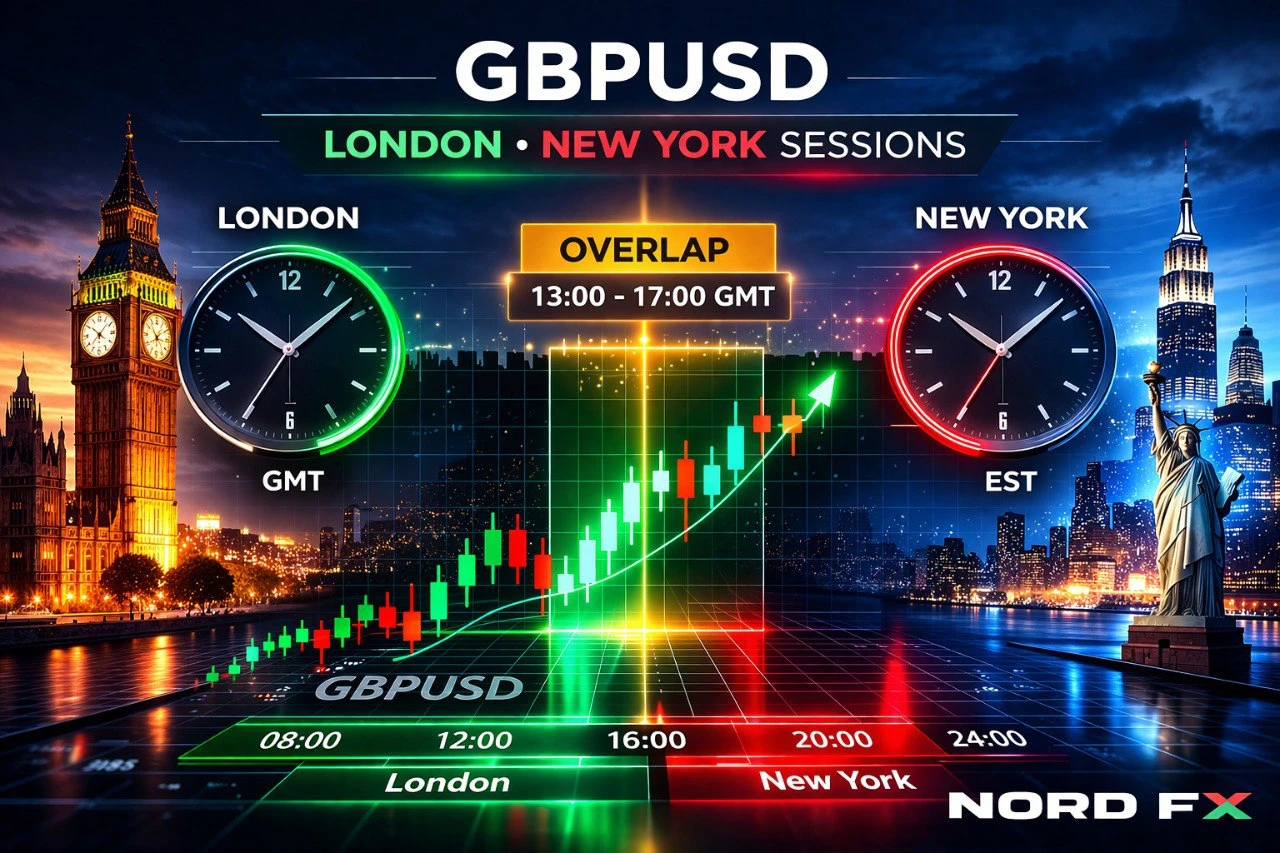
Timing matters greatly in GBPUSD trading. One of the most common mistakes among newer traders is opening positions when the market is thin and then wondering why price action feels random. Cable tends to be most active during the London session and especially during the London-New York overlap, when both major financial centres are open and liquidity is highest. Market-hour references consistently highlight the London session and the overlap with New York as the most active periods for FX trading.
This does not mean GBPUSD cannot move at other times. It can. But if you want cleaner movement, better liquidity and more reliable reactions to levels, the European morning and the overlap are often the most productive windows. For many traders, this one adjustment alone improves trade quality.
Trade levels, not emotions
Because GBPUSD can move quickly, traders are often tempted to enter after a strong candle out of fear of missing the move. Usually that is exactly when discipline disappears. A smarter approach is to identify meaningful areas before price gets there.
Support and resistance remain highly relevant in Cable. Previous daily highs and lows, weekly ranges, session opens, swing points and round numbers can all matter. If a level has already attracted strong buying or selling interest, the market may react there again. That reaction can come as a bounce, a false break or a confirmed breakout.
A useful rule is to think in scenarios instead of predictions. Rather than saying, “GBPUSD must go up”, define two paths. For example, if price holds above support and momentum returns, you look for continuation. If support breaks and the retest fails, you look for a bearish setup instead. This mentality reduces emotional attachment and makes trading more flexible.
Keep your strategy simple
Another important GBPUSD trading tip is to avoid overcomplicating the chart. Many losing traders have too many indicators and too little clarity. In practice, a clean chart with trend structure, support and resistance, and one or two confirming tools is often enough.
For trend traders, moving averages can help define direction. For breakout traders, range boundaries and volatility expansion are key. For pullback traders, the focus is usually on whether price returns to a strong zone and shows rejection in the direction of the larger trend.
The exact strategy matters less than consistency. A simple method repeated properly is usually better than a sophisticated method applied emotionally. If you are still developing your process, it makes sense to study the basics first in the NordFX Learning Center and then practise on a platform you know well, such as MetaTrader 5. NordFX states that MT5 provides advanced charting, multiple order types and analytical tools that support both manual and systematic trading.
Risk management matters more on GBPUSD
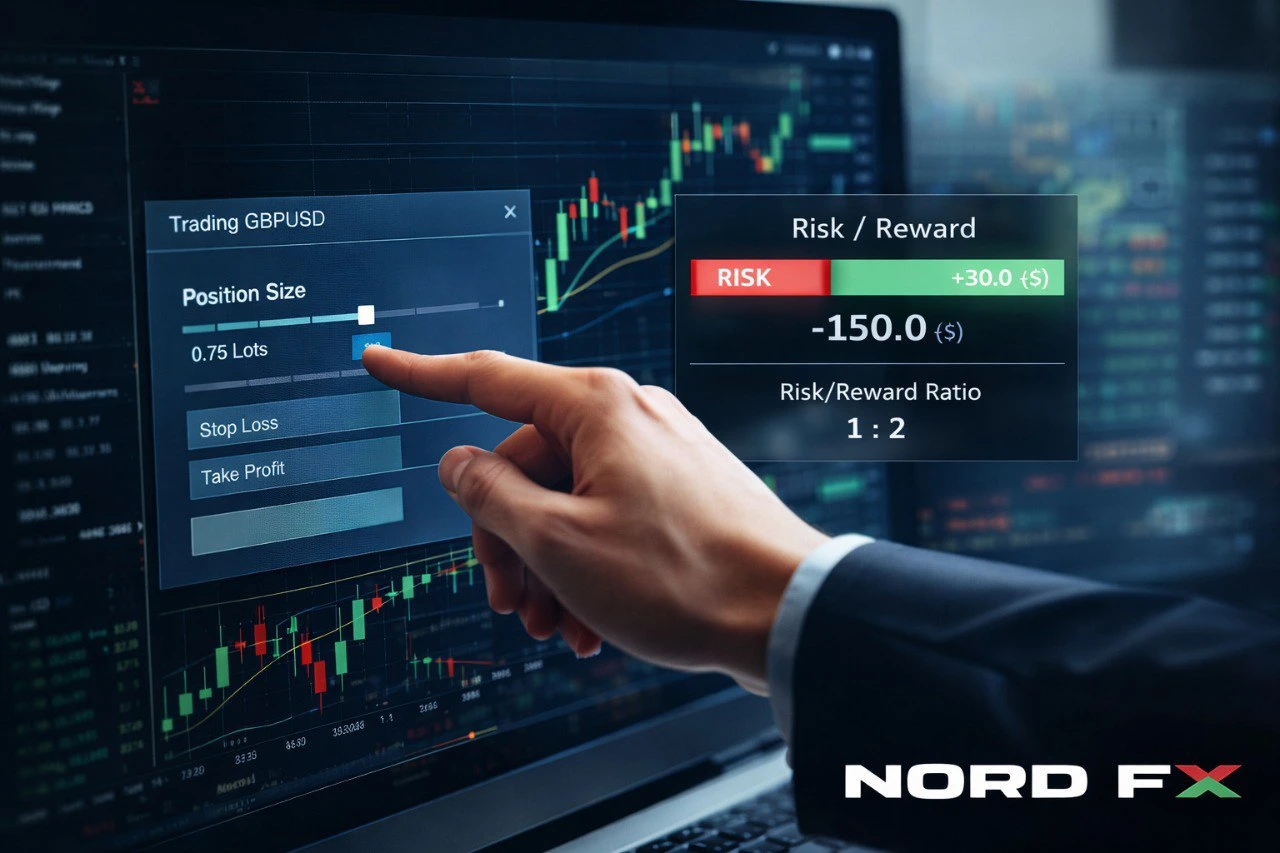
Cable’s volatility can be attractive, but it also means position sizing matters even more. Traders often make the mistake of using the same lot size on GBPUSD that they would use on a slower pair, without adjusting for the wider swings. That can turn an ordinary pullback into an unnecessary loss.
A practical approach is to decide your risk first and your entry second. In other words, determine how much of your account you are willing to lose if the trade is wrong, then calculate the position size based on your stop-loss distance. This keeps risk stable even when market conditions change.
Stop-loss placement should also be logical. A stop placed too close to the entry may get hit by normal noise. A stop placed too far away may destroy the reward-to-risk profile. The best location is usually beyond the level that invalidates the setup. If price reaches that point, the original idea is no longer working and the trade should be closed.
This is also why account structure matters. Different traders prefer different pricing models, spreads and execution styles. NordFX’s official accounts page outlines its MT4 and MT5 account options for traders with different approaches and preferences.
Respect economic news
GBPUSD is highly sensitive to scheduled macro releases. UK CPI, UK wages, UK GDP, US CPI, US non-farm payrolls, FOMC statements and Bank of England decisions can all trigger sharp movement. Sometimes the biggest mistake is not being wrong on direction, but being in the market at the wrong moment with the wrong size.
That does not mean news should always be avoided. Some traders specialise in it. But unless you have a tested event-driven method, it is usually better to reduce risk before major releases and trade the post-news structure rather than the first burst of volatility.
A good habit is to know the calendar every day. That creates context. A technical breakout just before a major central bank decision is not the same as a technical breakout on a quiet session with no significant data due.
Build a repeatable routine
The traders who improve are usually the ones who work systematically. Before the session begins, check the macro calendar, mark key levels, note the broader trend and decide what would make you buy, sell or stay flat. After the session, review whether you followed the plan.
A trading journal is especially useful for GBPUSD because the pair often exposes behavioural weaknesses very clearly. If you keep entering late, moving stops, or trading against major news momentum, the journal will show that pattern. Once you can see the error, you can start correcting it.
Final thoughts
The best GBPUSD trading tips are not secret formulas. They are practical habits. Understand what drives the pound and the dollar. Focus on the hours when the pair is most active. Trade from important levels instead of reacting emotionally. Keep your method simple. Control risk carefully. Respect news volatility. Review your process and improve step by step.
GBPUSD can be an excellent pair for traders because it offers movement, liquidity and frequent opportunity. But it rewards preparation more than excitement. If you approach Cable with patience and structure, it becomes much easier to separate real setups from noise.
To continue improving your skills, explore the NordFX Learning Center, compare available trading accounts, review the broker’s trading platforms, and read NordFX’s detailed guide on how to trade forex for beginners. Those resources can help turn general market interest into a more disciplined trading routine.