Cryptocurrencies are digital assets designed to function as a medium of exchange, a store of value, or a programmable financial instrument within decentralised networks. Unlike traditional money issued by central banks, most cryptocurrencies operate on distributed systems where transaction verification and monetary issuance are governed by code rather than a single authority.
Over the past decade, cryptocurrencies have evolved from a niche technological experiment into a recognised part of global financial markets. Today, they are discussed alongside currencies, commodities, and stock indices in daily commentary and weekly outlooks, including those published in the NordFX Market News section. Yet despite growing adoption, many investors still ask a fundamental question: what are cryptocurrencies and how do they actually work?
The Core Idea Behind Cryptocurrencies
At their foundation, cryptocurrencies are built on the concept of decentralised record-keeping. Instead of relying on a central institution such as a bank to maintain account balances, cryptocurrencies use a distributed ledger called a blockchain.
This ledger is shared across a network of computers. Each participant stores a copy, and transactions are verified collectively according to predefined consensus rules. The result is a system designed to reduce reliance on intermediaries while increasing transparency and resilience.
When someone sends cryptocurrency, they are not transferring a physical coin. They are updating a record on the blockchain. The system verifies that the sender has sufficient balance and authorises the transaction using cryptographic signatures.
What Is a Blockchain?
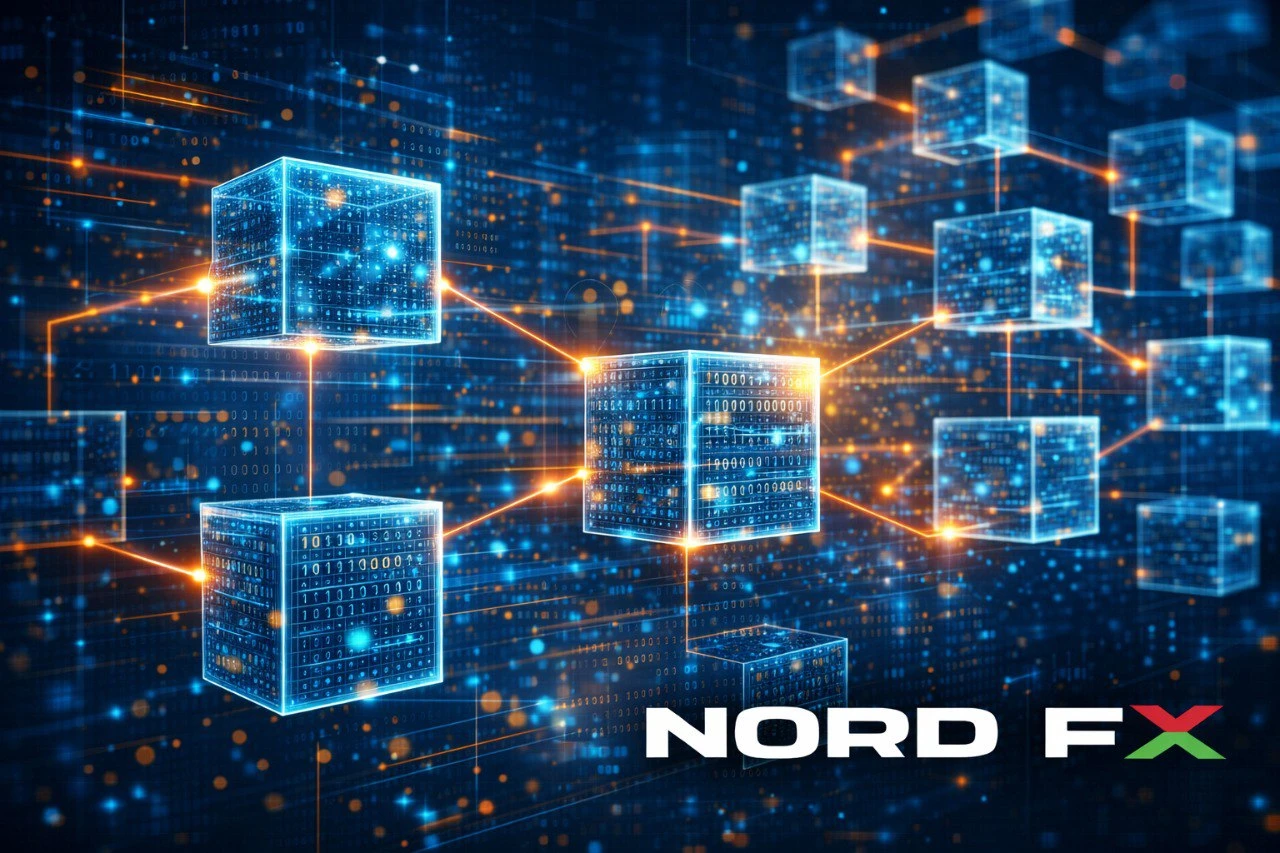
A blockchain is a chronological chain of transaction records grouped into blocks. Each block references the previous one, forming a continuous and tamper-resistant structure. Altering past records would require controlling a substantial portion of the network’s computing or staking power, which is designed to be economically impractical.
Public blockchains are transparent, meaning transactions can be viewed by anyone. However, users are identified by wallet addresses rather than personal names, creating a pseudonymous environment.
This structure provides three key characteristics: transparency, decentralisation, and resistance to tampering. Rather than trusting a single authority, users rely on mathematical rules and distributed consensus.
Wallets, Addresses, and Private Keys
To interact with cryptocurrencies, users need a wallet. A crypto wallet does not store coins in a physical sense. Instead, it stores cryptographic keys.
A public address functions like an account number. Others can send cryptocurrency to it. A private key acts as a digital signature that authorises outgoing transactions.
If a private key is lost, access to the funds may be permanently lost. If it is compromised, assets can be transferred by unauthorised parties. This is why security is one of the most critical aspects of cryptocurrency ownership.
Some participants prefer self-custody, managing their own keys. Others use exchanges or brokers that provide custodial solutions. Each approach involves trade-offs between convenience and control.
Coins and Tokens: Not the Same Thing
The term cryptocurrency includes different categories of digital assets.
A coin is the native asset of its own blockchain. It is typically used to pay transaction fees and secure the network.
A token, on the other hand, is built on top of an existing blockchain through smart contracts. Tokens can represent utilities within applications, governance rights, stable-value instruments, or digital claims linked to real-world assets.
Understanding this distinction is important because valuation drivers and risk profiles differ between coins and tokens.
How Cryptocurrencies Are Created
Traditional currencies are issued by central banks. Cryptocurrencies follow protocol-defined issuance rules.
Some networks operate on proof-of-work systems, where miners validate transactions by solving complex computational problems. In return, they receive newly issued coins and transaction fees.
Other networks use proof-of-stake models. Validators lock up funds as collateral and help secure the network. If they act dishonestly, they risk losing part of their stake.
Each cryptocurrency defines its own supply schedule. Some have a fixed maximum supply. Others allow ongoing issuance. These monetary characteristics influence long-term dynamics, although they do not eliminate volatility.
Why Do Cryptocurrencies Have Value?
Cryptocurrency value is shaped by several interconnected factors.
Utility plays a significant role. If a blockchain enables payments, decentralised applications, or financial infrastructure, demand for its native asset may increase.
Scarcity can influence perception. Assets with limited supply are sometimes viewed as potential stores of value.
Network effects are also crucial. As more developers, users, and institutions participate in an ecosystem, its functionality and resilience may improve.
Liquidity and accessibility matter as well. Assets available through established trading platforms tend to attract broader participation.
At the same time, cryptocurrency markets are sensitive to macroeconomic conditions, regulatory developments, technological upgrades, and market sentiment.
Smart Contracts and Programmable Finance
One of the most transformative developments in crypto has been the introduction of smart contracts. These are self-executing programs deployed on blockchains.
Smart contracts allow financial agreements to run automatically when predefined conditions are met. They power decentralised exchanges, lending protocols, token issuance systems, and many other applications.
This programmability has expanded blockchain technology beyond digital money into areas such as decentralised finance, digital identity, gaming, and asset tokenisation.
However, smart contracts also introduce technical risks. Coding errors or flawed economic designs can lead to vulnerabilities.
Stablecoins and Market Infrastructure
Volatility is one of the defining characteristics of many cryptocurrencies. To address this, stablecoins were created.
Stablecoins are digital tokens designed to maintain relatively stable value, often linked to fiat currencies. They are widely used for trading and liquidity management within crypto ecosystems.
Different stablecoin models exist, including fiat-collateralised, crypto-collateralised, and algorithmic systems. Each model carries specific operational and systemic risks.
Stablecoins now form a key part of digital asset infrastructure, linking traditional finance with blockchain-based systems.
Owning Cryptocurrency vs Trading It
There are two primary ways individuals engage with cryptocurrency markets.
The first approach involves direct ownership. Users purchase coins or tokens and hold them in wallets or exchange accounts.
The second approach involves trading price movements without necessarily owning the underlying asset. This is often done through derivatives such as CFDs, which allow traders to speculate on both rising and falling markets.
Before entering any market, it is essential to understand execution, pricing mechanisms, and trading fundamentals. These concepts are explained in detail in the NordFX How Trading Works section.
Cryptocurrency trading is available via multi-asset platforms such as NordFX MetaTrader 5, which provides advanced charting tools, technical indicators, and automated strategy capabilities. Information about trading conditions, leverage, and account specifications can be found on the NordFX Accounts page.
Risks You Should Understand
Cryptocurrencies remain high-risk instruments.
Price volatility can be extreme. Regulatory decisions can rapidly shift market conditions. Technological risks such as network failures or security breaches may affect participants.
Liquidity conditions can change during periods of stress, leading to wider spreads and slippage.
Risk management, position sizing, and disciplined strategy development are therefore essential for both investors and traders.
A Practical Perspective
Cryptocurrencies represent a convergence of cryptography, distributed computing, economic incentives, and open-source innovation. They challenge traditional financial infrastructure while creating new opportunities and risks.
However, cryptocurrencies are not uniform. Each project operates within its own ecosystem, with distinct governance models, supply rules, and adoption dynamics.
For beginners, the most effective starting point is understanding how blockchains function, how wallets and private keys work, and what drives supply and demand. From there, deeper exploration can include trading mechanics, risk management, and broader market analysis.
Additional educational resources covering financial markets and trading principles are available in the NordFX Useful Articles section.
Cryptocurrencies have secured a lasting place in global financial discussions. Whether viewed as technological infrastructure, speculative assets, or emerging monetary systems, they continue to evolve. As with any financial instrument, informed decision-making and careful risk assessment remain essential.
Disclaimer: This material is for informational purposes only and does not constitute investment advice. Trading on financial markets involves risk and can result in loss of funds.